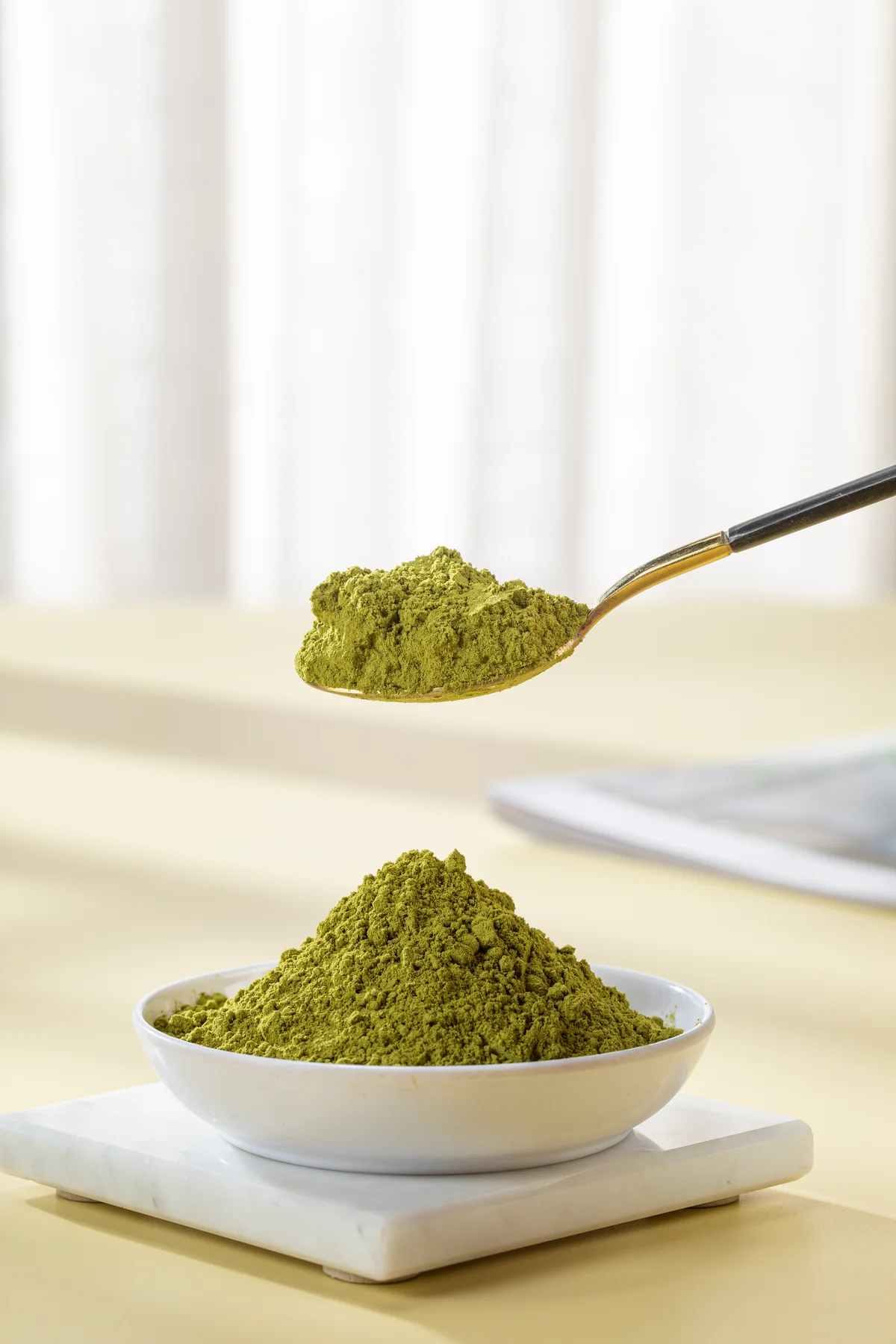
Start with what the image actually shows
A real matcha photograph can communicate powder colour, visible texture, vessel choice and preparation context. Those observations are useful when a team is comparing samples or explaining an intended beverage direction.
Do not let the image become an unspoken specification. A photograph does not establish grade, origin, ingredient composition, analysis, shelf life, minimum order, or future batch consistency.
Add the application beside the reference
Write the intended use next to the image: whisked tea, latte, cold drink, bakery, food-service blend, or retail powder. The same visible powder may need a different sensory target depending on how it will be prepared.
Include the serving method, liquid base, sweetness level, temperature and whether the powder must remain visually recognizable after mixing. These details give the supplier a reviewable sample question rather than a vague request for the same colour.
Ask for a controlled comparison
Request samples identified by code and prepare them under the same conditions. Record colour, aroma, bitterness, mouthfeel, finish and application fit. If the sample is intended for a latte, taste it in the actual milk or beverage base rather than only in water.
Keep the supplied photograph as the visual reference, not the approval record. The approval record should name the coded sample, preparation method, revision request and decision owner.
Separate visible questions from evidence requests
A buyer can ask whether a sample matches the visible product direction while separately requesting the specification, ingredient identity, allergen information and any destination-market documents required for the route.
This separation protects the team from making claims that the photo cannot support and makes the next supplier conversation more efficient. Put every unresolved question in the buyer brief.
Close the reference with a named next step
When the team selects a direction, save the image reference beside the coded sample, preparation notes, and the decision owner. Link it to the relevant product page so a later packaging or document review can understand the visible direction without treating the photograph as technical proof.
The next supplier request should state what needs confirmation and what is only a preference. That small distinction gives both sides a usable sample brief and avoids carrying visual assumptions into claims, label text, or commercial decisions.
Link the brief to the right buyer pages
A matcha review is easier to govern when it links the product direction, the intended use scene, the sample request, and the final buyer brief. Those links give colleagues a consistent starting point and help ensure that a visual reference, a recipe test, and a technical question do not become disconnected records.
Use the final brief to confirm the target channel, decision stage, and remaining questions. If the buyer later needs packaging or document review, the same sample code and preparation notes should travel with the request. That workflow supports a more complete B2B decision without claiming that a visible image proves product performance.