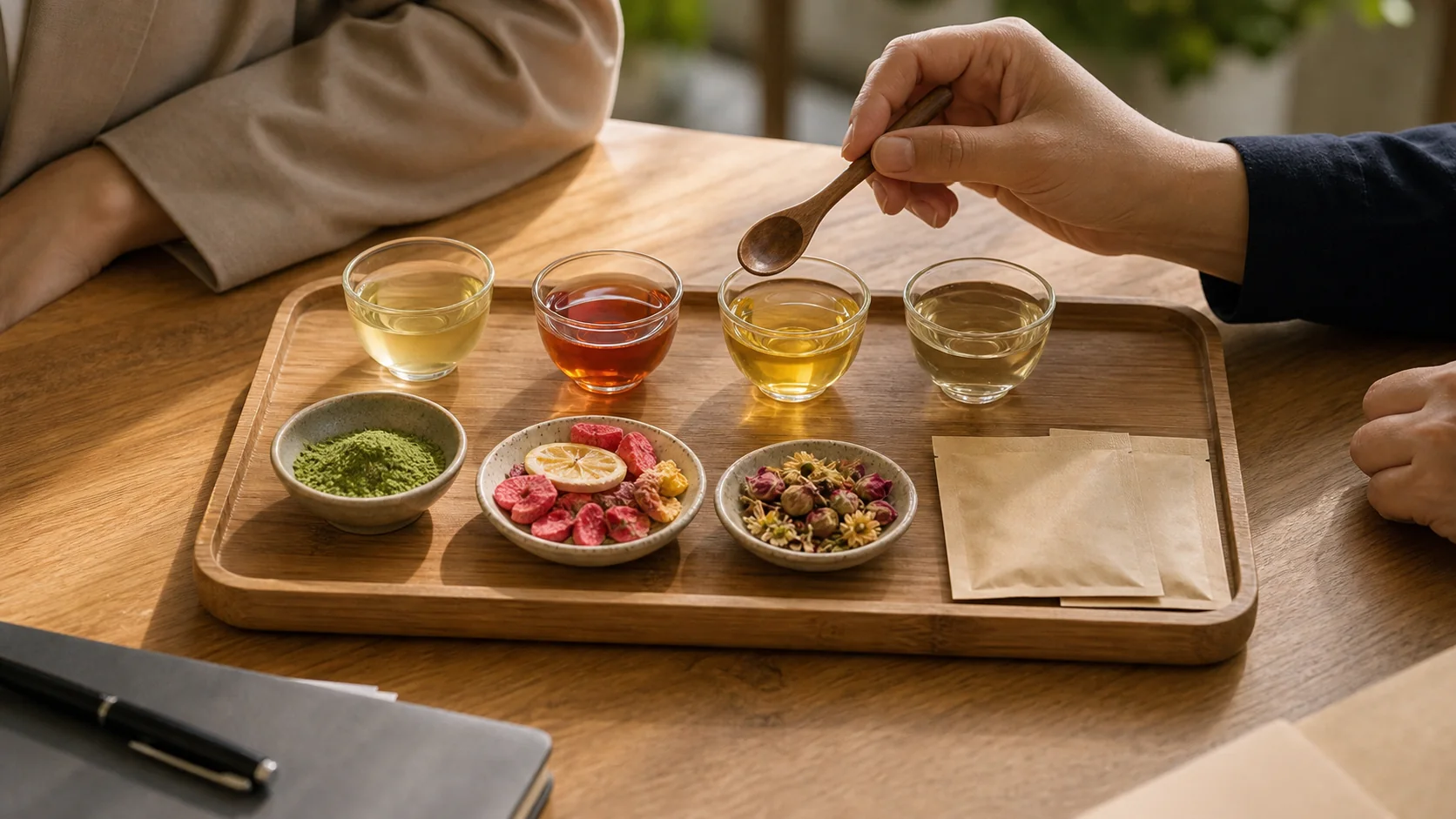
Before requesting samples
Write a short buyer brief covering target market, sales or service channel, product family, preparation, sensory direction, preferred format, packaging objective and document questions. Mark requirements and preferences separately. This gives the supplier enough context to select or develop relevant samples without inventing decisions on the buyer's behalf.
Decide what the first round must teach the team. It may compare category routes, ingredient forms, flavor directions or packaging formats, but it should not try to answer every question at once. Name the internal decision owner and the people whose feedback will influence the next round.
When the sample kit arrives
Check that every sample has a stable code and a matching description. Record receipt date, condition, packaging and any preparation guidance supplied. Photograph the set before distributing it. If a label is unclear or a sample appears different from the packing list, ask for clarification before conducting a formal comparison.
Keep product samples connected to their accompanying documents and messages. Do not rename them casually in internal chat. A simple sample register should identify supplier code, buyer working name, product family, intended test and status. This protects the decision history when several rounds or departments are involved.
During preparation and tasting
Use a written preparation method for each comparison and record any deviation. Serve coded samples in a consistent order where practical. Ask reviewers to observe aroma, flavor, balance, appearance, texture where relevant, finish, format behavior and fit with the intended application. Avoid discussing price or supplier preference before independent sensory notes are collected.
Feedback should be specific enough to guide a decision. Replace comments like too ordinary with an observable direction, such as needing a more distinct roasted note or a cleaner fruit finish. Separate personal preference from channel requirements and flag disagreements that require a decision owner rather than averaging incompatible opinions.
After the tasting session
Consolidate notes into advance, revise, hold or reject decisions and explain why. For revisions, list requested changes in priority order and preserve attributes that should remain unchanged. Send one approved feedback document to the supplier so different stakeholders do not create conflicting development instructions.
Identify questions that tasting cannot answer. Product identity, composition, packaging structure, storage, testing and certifications require relevant documentation. Ask the supplier to confirm what is available for the actual route. Do not translate a good sensory result into an unsupported technical or compliance conclusion.
For a revision round
Link the new sample to the previous code and state what changed. Re-test the requested change under the same relevant conditions, while also checking whether another important attribute moved unexpectedly. Keep the number of active variants manageable so the team can make a clear comparison rather than accumulating samples without decisions.
If the brief itself changed, document that separately from supplier execution. A new target channel, ingredient restriction or packaging format may justify a new route rather than another minor revision. Recognizing this distinction keeps supplier feedback fair and prevents the team from approving a sample against an outdated objective.
At sample approval
Approval should identify the exact sample code, preparation method, intended format, sensory rationale, document status and any remaining validation. If packaging affects product performance or presentation, complete a format-relevant confirmation before calling the product final. Record who approved the decision and the date.
A sample approval is not a substitute for a current commercial proposal or production agreement. Ask the supplier to provide applicable terms and confirmations for the defined route. Preserve the approval packet so later teams can compare delivered product, artwork and future revisions with the decision that actually launched the next stage.