Understand what the process changes
Freeze-drying and conventional drying remove moisture through different processing routes, which can produce visibly different structures and handling behavior. Buyers should avoid treating the process name as a complete quality grade. Fruit variety, preparation, cut, storage and final application also influence what arrives in the cup and package.
Ask the supplier to identify the actual ingredient form being sampled. Whole slices, pieces, granules and powders cannot be compared as if process were the only variable. The buying question is not which method always wins, but which combination of process and format best supports the intended tea or beverage experience.
Compare appearance before and after infusion
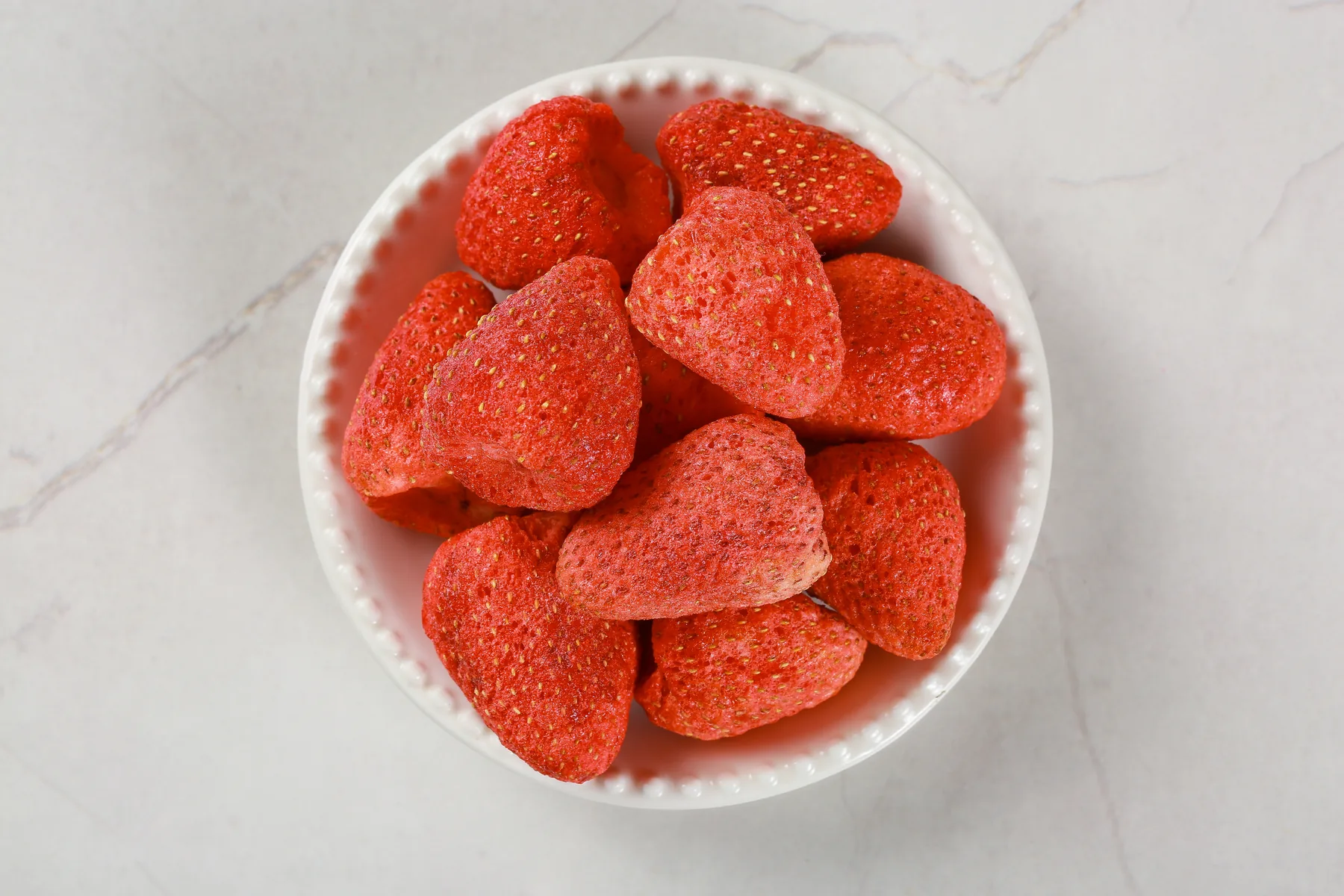
Freeze-dried pieces often present a porous, lightweight structure that can be visually distinctive in a clear pouch or serving vessel. Conventionally dried fruit may present a denser or darker appearance depending on material and process. These are sample observations to verify, not promises that apply to every fruit or supplier.
Photograph coded samples dry, during preparation and after the planned serving time under consistent lighting. Note whether the fruit remains recognizable, floats, sinks, breaks apart or changes the beverage appearance. The right result depends on the concept: a visible cold infusion may prioritize a different behavior from a finely cut tea bag blend.
Evaluate flavor contribution in the full recipe
Taste the fruit ingredient alone when practical, then test it with the tea or botanical base. This helps the team distinguish the fruit's own aroma and acidity from interactions with other components. Use the intended preparation method and record whether the profile appears early, develops slowly or becomes less distinct in a mixed formulation.
Do not infer composition, sweetness or nutritional performance from appearance. If those characteristics matter, request relevant specifications or testing information for the actual ingredient. Sensory panels can describe what they experience, while technical and label decisions require appropriate documentation and market review.
Match physical form to the product format
A large fruit piece can support visual storytelling in a loose blend or transparent cold-brew pouch but may be unsuitable for a small tea bag. Smaller pieces may blend and portion more evenly while offering less visual drama. Powders can support formulated drinks but create different dispersion and packaging questions.
Review breakage, dust, blend separation and portion consistency during realistic handling. These observations can influence whether fruit is packed alone, combined with a base or added as a separate component. The supplier should confirm which formats are available and provide commercial details only after the buyer defines the intended route.
Consider protection and service workflow
Product protection matters for both routes. Ask about the packaging structure, closure, storage guidance and handling appropriate to the sampled ingredient. Do not invent a shelf-life figure or assume that a visually similar product uses the same pack. Final packaging decisions should follow documented product needs and the buyer's distribution environment.
Also test operator and consumer use. Lightweight pieces may behave differently during scooping or portioning, while dense pieces may require a different preparation expectation. A format that looks compelling in photography should still be practical for the cafe, hotel, retailer or household use described in the category brief.
Make the selection with evidence attached
Summarize the comparison in a decision table covering sample identity, fruit form, process, dry appearance, infusion behavior, sensory role, format fit, packaging questions and documents reviewed. Add open questions rather than filling gaps with assumptions. The table should make clear why the chosen route supports the product concept.
A buyer may choose freeze-dried fruit for one visible infusion and a conventionally dried ingredient for another blend. That is a portfolio decision, not a contradiction. Preserve the comparison method so later fruits can be evaluated consistently while still allowing each material and supplier sample to be judged on its own evidence.