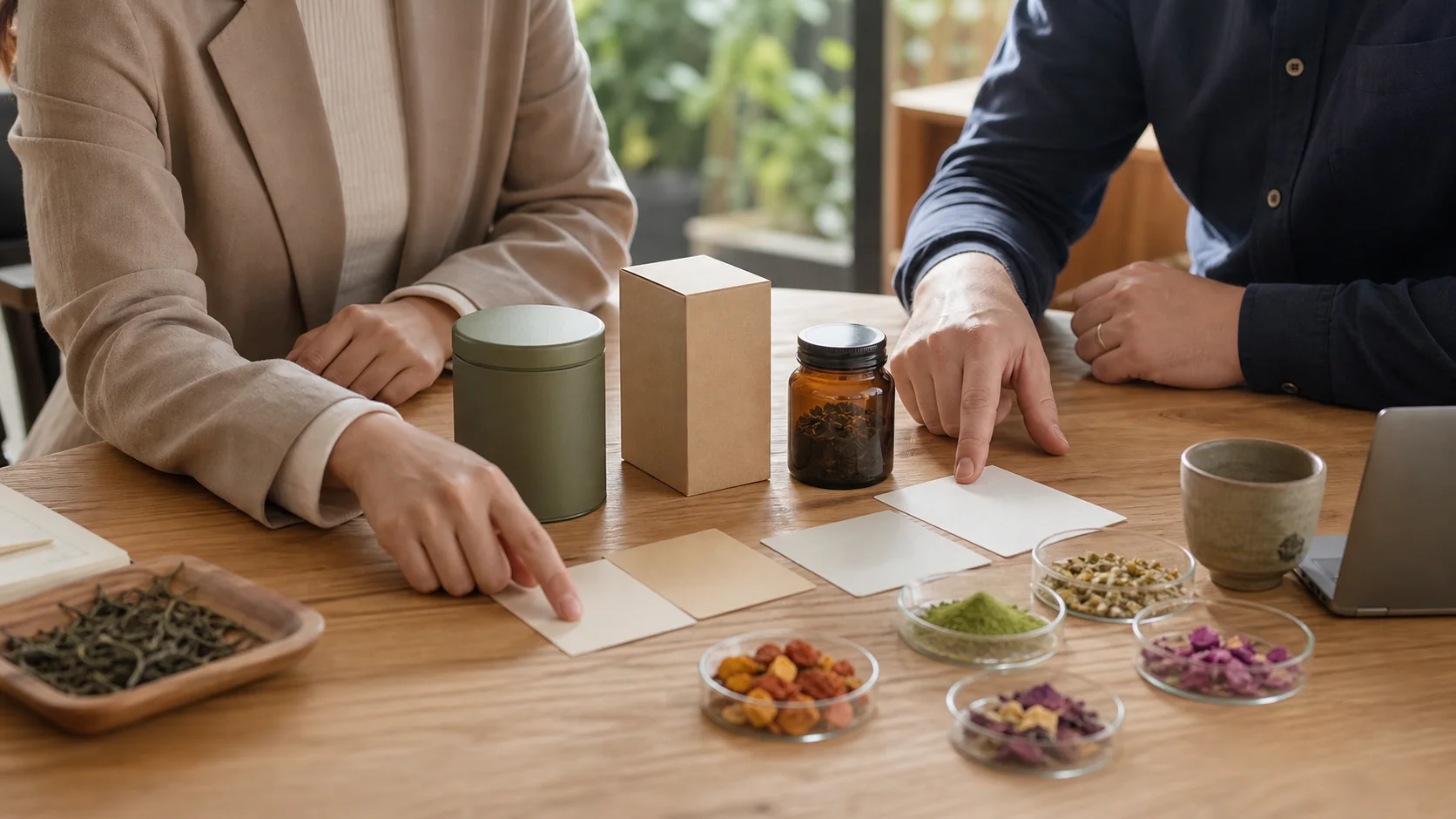
The channel is the first packaging filter
Retail shelves, ecommerce parcels, cafe back bars, hotel rooms, office service and buyer sample kits create different packaging jobs. Start by describing who handles the pack, how often it is opened, where preparation occurs and what information must be visible. This narrows the field before teams become attached to a shape or finish.
A format can serve more than one channel, but the trade-offs should be explicit. A giftable structure may add presentation value while complicating replenishment. A foodservice pack may be efficient but unsuitable for direct retail storytelling. Compare each option against the lead use scene and treat secondary scenes as separate decisions.
Pouches and tins for loose tea or powder
Pouches can support flexible sizes and efficient storage, while tins can create a durable, reusable presentation. Either may hold loose tea, botanical blends or matcha when the structure is appropriate to the product. Buyers should discuss closure, product protection, filling, label area, opening experience and likely secondary packaging.
Do not assume that a material or closure is suitable based only on appearance. Ask for the applicable packaging specification and product compatibility information. Test how the pack behaves during repeated opening and realistic handling. For powder, also consider scooping, mess and preparation instructions; for visible blends, consider whether a window helps or conflicts with protection needs.
Tea bags, triangle bags and single-serve options
Single-serve formats can simplify portioning and service, but they change the way a blend is cut, presented and infused. Bag size and material, string or tag configuration, envelope options and outer carton all affect the product system. Test the actual blend in the intended bag rather than approving loose material alone.
Hospitality buyers may prioritize clean service and clear preparation. Retail buyers may place more weight on carton communication and individual wrapping decisions. Ask the supplier which configurations are available for the chosen product and what information must be confirmed. Avoid publishing guessed minimums, timing or format claims before receiving a current written response.
Stick packs and formulated drink routes
Stick packs can suit portioned powders or formulated drink concepts when the product and filling route are compatible. They are not a direct substitute for every tea format. Buyers should define how the contents disperse, what preparation instruction is needed and whether the consumer requires tools or an additional base.
A development review should examine pack opening, powder flow, serving accuracy, preparation behavior and label space. Composition and processing questions need technical confirmation for the actual formulation. Keep sensory approval, packaging approval and regulatory review as connected but distinct records so a successful mockup does not imply that the product route is production-ready.
Gift boxes and curated collections
Gift boxes can combine multiple tea formats, accessories or story elements, but every added component increases coordination. Define the recipient, occasion, opening sequence and whether the collection is fixed or replenishable. A restrained set with a clear product hierarchy is often easier to understand than a crowded assortment.
Use structural mockups to review fit and sequence before approving decorative finishes. Verify that product labels and instructions remain accessible inside the set. Any origin or ingredient story must match documented contents. A box should organize a real product experience, not conceal an unresolved selection of samples behind premium language.
Sample kits as a development format
A buyer sample kit has a different job from a consumer pack. It should make comparisons easy by using stable codes, preparation guidance, product descriptions and a feedback method. Packaging references can be included as blank structures or clearly identified concepts without pretending they are final production samples.
Use the kit to decide product and format direction before investing in finished artwork. Record what each element is meant to test. After the buyer selects a route, request current packaging specifications, commercial information and applicable documents from the supplier. That sequence keeps early creativity useful while protecting the project from unsupported assumptions.