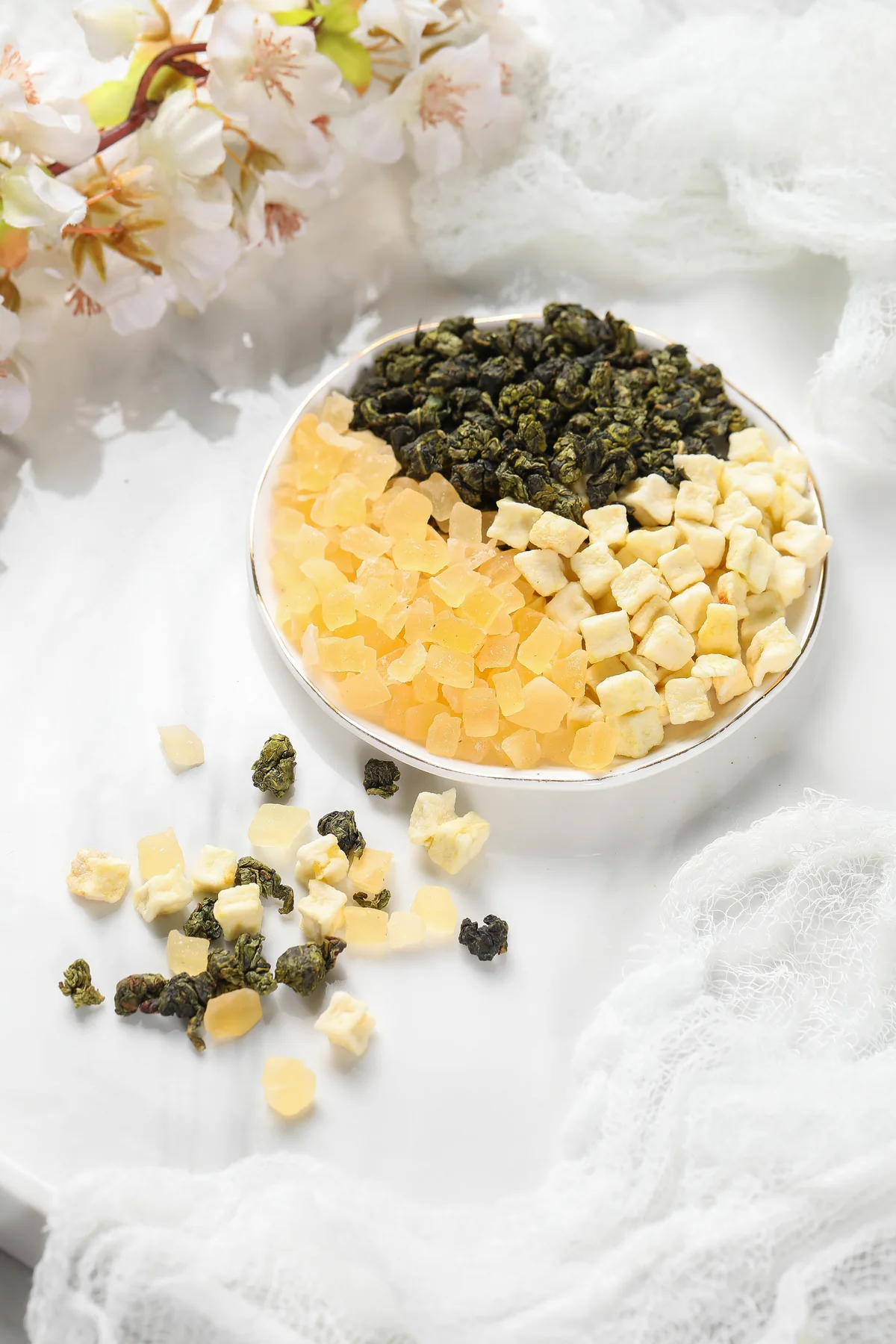
Begin with dry-piece identity
The dry photo helps a buyer discuss piece size, colour, shape and how visible the fruit should remain in a finished drink. It can also help compare a cube, slice, flake or mixed-piece direction.
Do not infer moisture level, ingredient ratio, flavour strength or shelf performance from the photograph. Those questions require a sample and supplier information.
Test the intended preparation
Prepare the sample using the target water temperature, steep time, vessel and serving format. Note how the pieces hydrate, how quickly the colour develops, how the fruit looks in the cup and whether the tea base remains balanced.
If the product will be cold brewed, compare it in the actual cold-water process. A hot infusion image cannot answer every cold-drink question.
Connect product form to packaging
Large visible pieces may need a different sachet, pouch or jar format than a fine-cut blend. Review the pack only after the likely product form and use method are clear.
Use blank or unbranded format references for early discussion. Final material, barrier, label and market requirements must come from the selected project scope.
Record approval by sample code
A useful record names the sample code, dry form, preparation conditions, sensory observations, requested changes and approval owner. Attach the real product photo as a reference, not as evidence of every technical attribute.
This makes future line extensions easier because the team can see which part of the direction was approved and which questions remain open.
Keep route decisions traceable
Save the preparation result together with the selected product route, packaging questions, and any evidence request that remains unresolved. A later reviewer should be able to see whether the decision concerned the dry appearance, the served drink, a filter choice, or a new commercial question.
That record keeps an attractive dry-to-cup image in its proper role: it supports a product conversation. The final direction still depends on the named sample, actual preparation conditions, and current information for the chosen project.
Plan the next sample round with context
If the team asks for a revision, state whether the request relates to dry appearance, rehydration, cup balance, visibility, or preparation fit. Send the request with the target channel and the controlled conditions used in the first review. This avoids vague directions such as make it stronger or make it more premium.
A clear record can then link the fruit tea product page, packaging discussion, and sample request. It gives a buyer a practical path to continue the review while leaving formula, label, commercial terms, and project-specific technical information to the appropriate confirmation process.
Keep the sample image with the review notes, but do not use it to fill unanswered technical questions. The buyer can return to the same controlled preparation if a later revision needs to be compared.