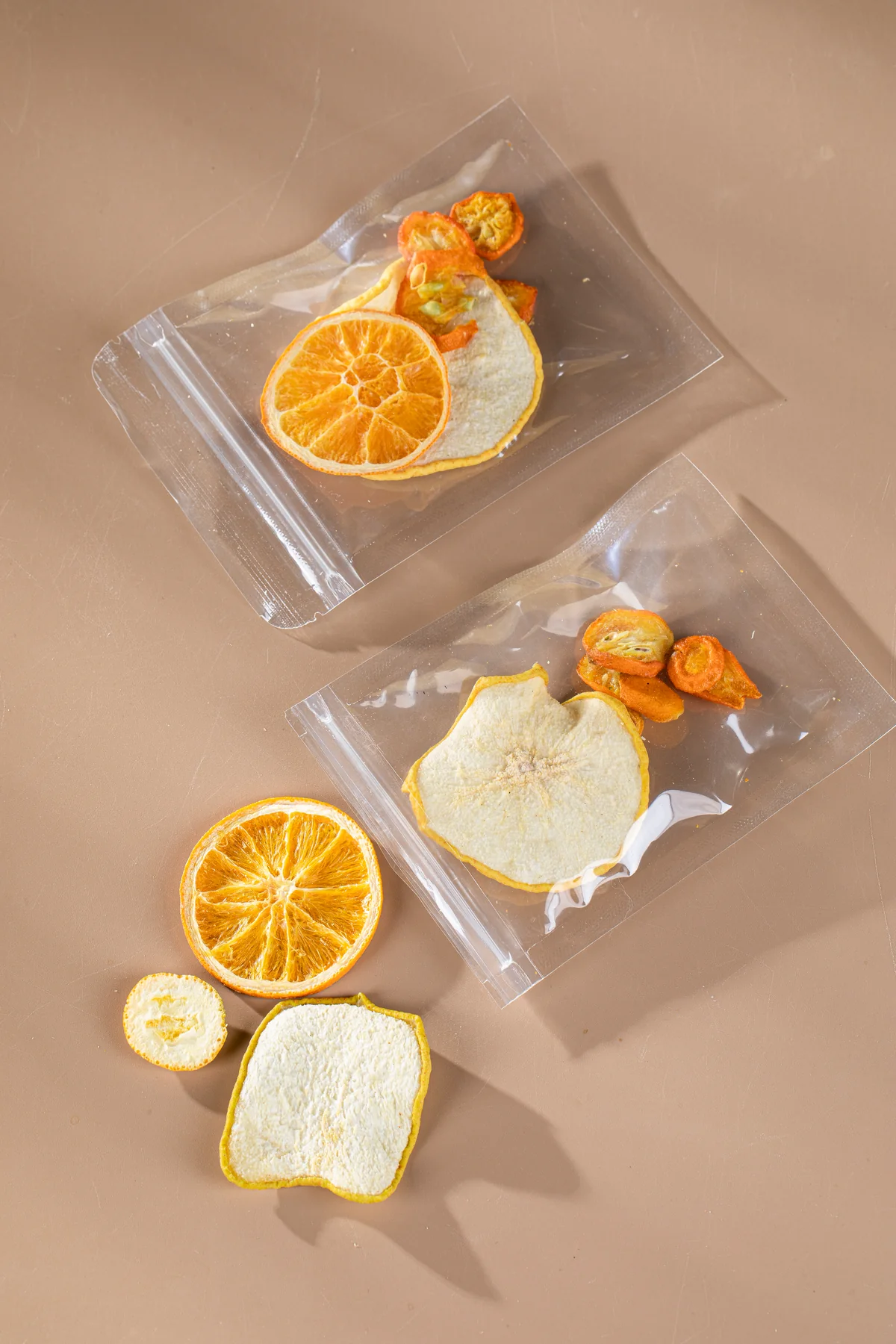
Use the dry photo to define the visual direction
The dried citrus and pear frame helps a buyer describe visible piece size, colour contrast and the amount of fruit presence expected in a serving. It gives the tasting team a shared visual starting point.
It does not confirm the full blend, ratio, origin, flavour intensity or shelf-life behaviour. Those details belong in the product and sample brief.
Prepare it as the channel will serve it
Record water temperature, steep time, vessel, serving size and whether the drink is served hot or chilled. A hotel welcome cup, retail sachet and cafe fruit infusion can require different preparation decisions.
Note cup colour, citrus aroma, pear character, sweetness perception, acidity and aftertaste. Use descriptive observations rather than health or functional claims.
Check format and pack questions together
Visible fruit pieces may need a suitable filter, sachet size or loose-leaf format. Discuss how the buyer will see and serve the product before choosing packaging direction.
Early pack references should remain unbranded and clearly provisional. Final materials, label inputs and destination-market review depend on the defined project route.
Approve a named sample, not a mood
A clear approval record names the sample code, preparation method, sensory notes, requested changes and decision owner. Keep the supplied photo attached as a visual reference so future revisions can be compared consistently.
When the sample is approved, request the current specification and any product- or batch-specific documents needed for the target market.
Carry the same conditions into the next review
If the buyer moves from a dry review to a sample round, repeat the documented water temperature, steep time, vessel, and serving situation. A consistent method makes it easier to decide whether a change came from the product direction or from preparation differences.
Keep market, label, and commercial questions open until the selected route is known. The guide can help organise a citrus-and-pear discussion, but it should not be read as proof of final composition, pack compatibility, or destination-market readiness.
Use the buyer brief as the source of truth
Link the product image, dry-form observations, preparation notes, and proposed format to one buyer brief. This gives a later sample reviewer a clear record of what the team meant by a citrus-and-pear direction and which decisions are still only preferences or questions.
The brief should continue to separate visible product form from supplier-confirmed information. By carrying the same code, conditions, and open items into the inquiry, the team can review a future sample efficiently without publishing claims about formula, source, technical performance, or market suitability that have not been verified.
A named decision owner can then confirm whether the next step is another tasting, a packaging discussion, or a request for current documentation. That sequence keeps project decisions clear for all reviewers and provides an auditable handoff for subsequent work, including packaging, label, and document colleagues.