For wellness brands looking to develop clean-label tea products, monk fruit offers a compelling natural sweetness solution. Unlike artificial sweeteners or even stevia, monk fruit (luo han guo) provides a smooth, rounded sweetness profile that works particularly well in tea applications. This guide walks through the practical considerations for building a monk fruit wellness tea line—from product positioning to packaging direction.
Why Monk Fruit for Wellness Tea
Monk fruit has gained significant attention from wellness-focused brands for several reasons. It provides natural sweetness without added sugar or calories, making it attractive for sugar-conscious product concepts. The sweetness comes from mogrosides, natural compounds found in the dried fruit. Unlike some natural sweeteners, monk fruit does not have a bitter aftertaste when formulated correctly.
For tea products specifically, monk fruit works well because the brewing process allows the sweetness to integrate naturally with the tea base. Whether using monk fruit dried fruit pieces, extract powder, or concentrated sweetener, the result is a clean-tasting naturally sweet tea that appeals to health-conscious consumers.
From a labeling perspective, monk fruit is recognized as a natural ingredient in most markets, allowing brands to maintain clean-label positioning without artificial sweetener declarations.
Product Positioning Considerations
Before developing your monk fruit tea line, consider your target market positioning carefully. There are several directions a brand can take:
**Wellness Daily Ritual** – Position the tea as part of a daily wellness routine, emphasizing the naturally sweet taste without sugar. This works well for retail channels and subscription models.
**Sugar-Conscious Alternative** – Focus on consumers actively reducing sugar intake. This positioning requires careful language to avoid health claims while still communicating the benefit.
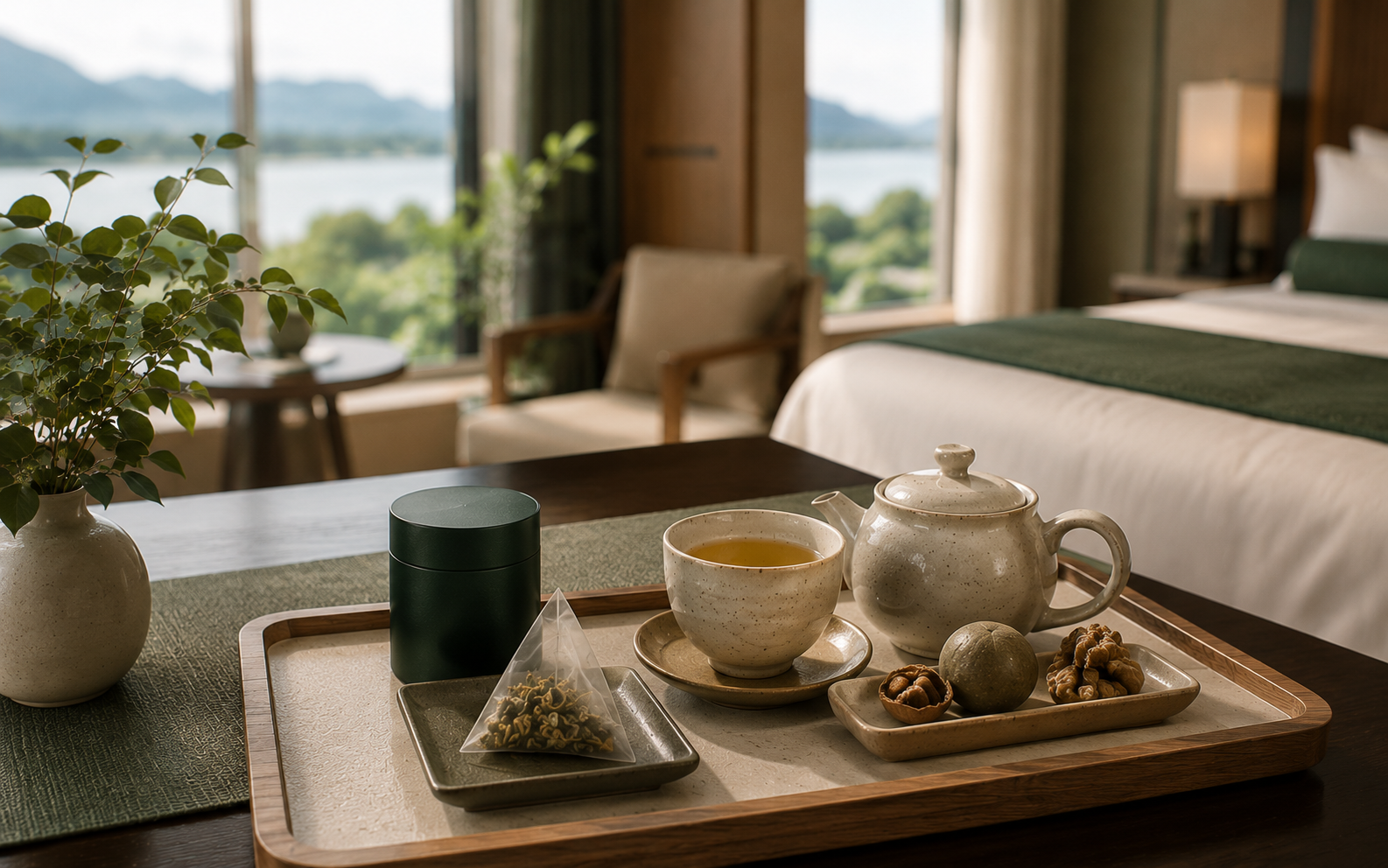
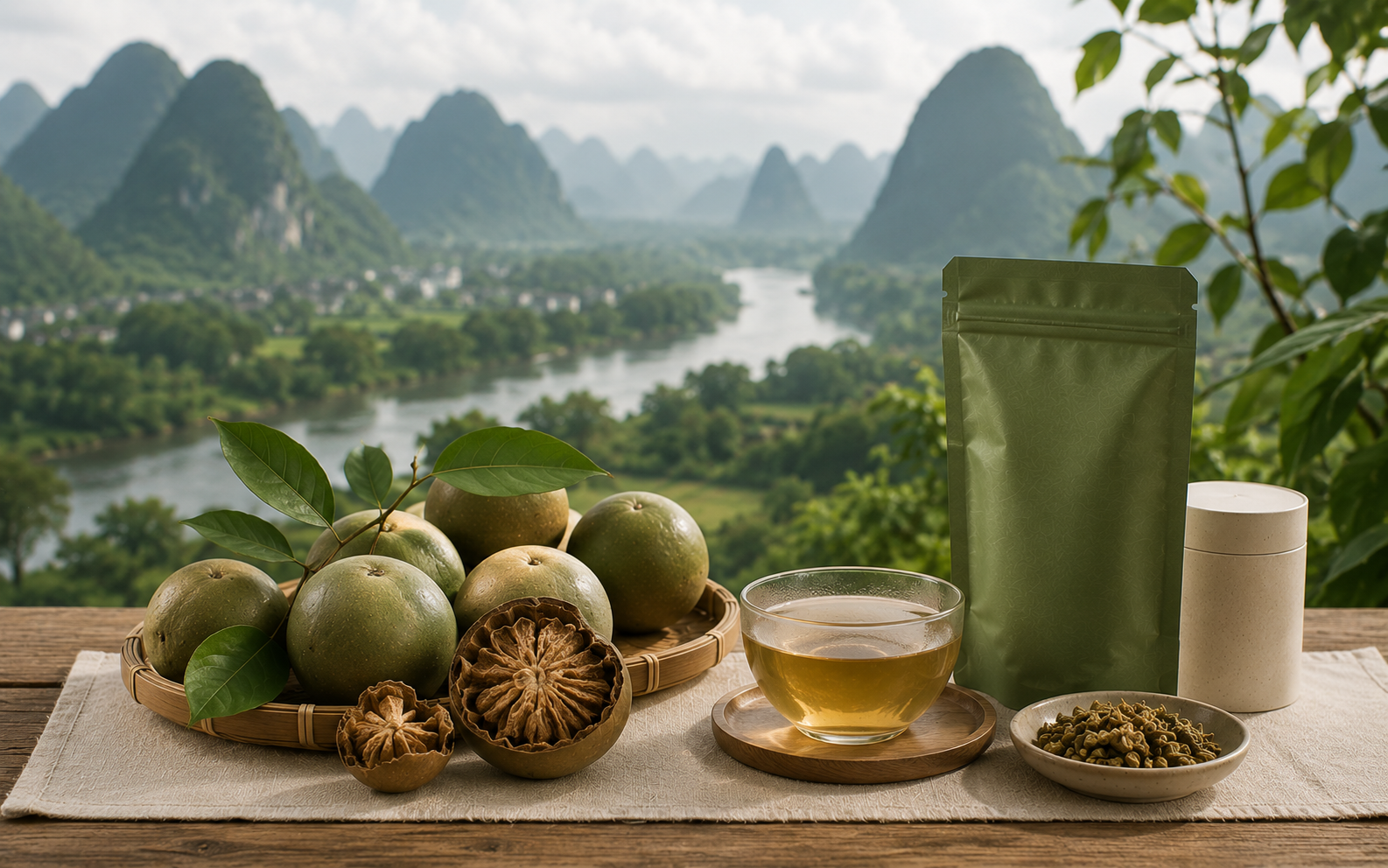
**Premium Gift and Hospitality** – Higher-end packaging and presentation for hotel amenities, corporate gifts, and specialty retail. The origin story from Guilin adds value in this segment.
**Café and Food Service** – Ready-to-brew or concentrated formats for wellness cafés and restaurants looking to offer naturally sweetened options.
Your positioning will influence everything from product format to packaging direction to minimum order quantities.
Product Format Options
Monk fruit wellness tea can take several forms, each with different production requirements and market applications:
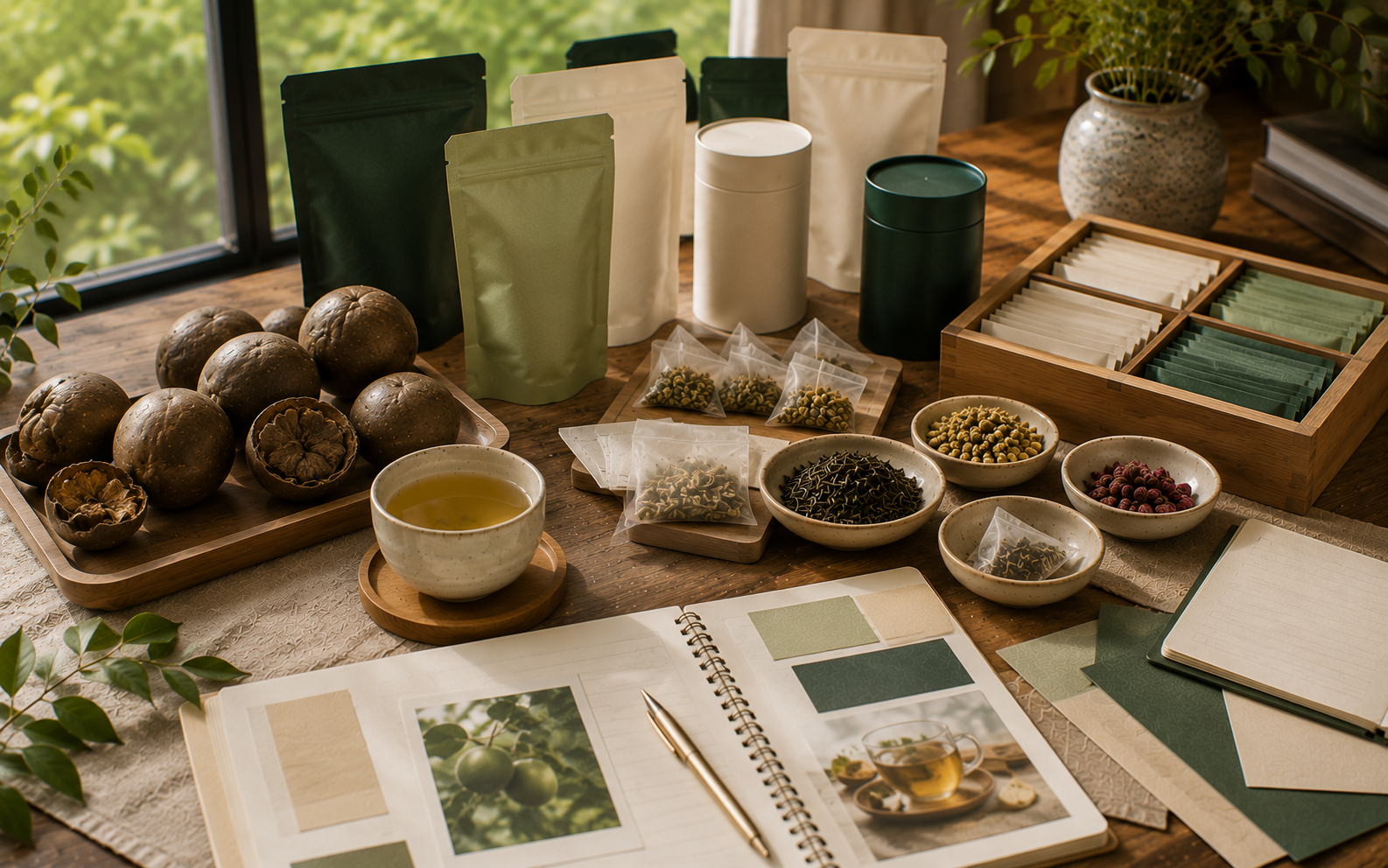
**Loose Leaf Blends** – Dried monk fruit pieces blended with tea leaves and botanicals. Natural appearance appeals to premium retail. Requires proper moisture control in packaging.
**Tea Bags and Sachets** – More convenient format for daily use and hospitality. Pyramid sachets preserve ingredient visibility while improving brewing. Standard tea bags work for food service volume.
**Instant Powder** – Monk fruit extract blended with tea powder for instant preparation. Good for food service and ready-to-drink applications.
**Concentrated Syrup** – For café and beverage applications where consistent sweetness levels are important. Requires cold storage and has shorter shelf life.
Most buyers start with tea bag or sachet formats due to convenience and familiar consumer usage patterns. Loose leaf appeals to specialty retail but requires more education.
Formulation Considerations
Getting the sweetness level right is critical for monk fruit tea products. Too sweet and it feels artificial; too subtle and consumers may not perceive the value.
Key formulation considerations include:
**Tea Base Selection** – Black tea, green tea, oolong, and herbal bases all work differently with monk fruit. Herbal and lighter teas often pair best as the monk fruit sweetness is more apparent.
**Sweetness Intensity** – Monk fruit extract concentration determines sweetness. Most tea applications use 0.5-2% extract in the blend, depending on the desired sweetness profile.
**Complementary Botanicals** – Chrysanthemum, goji berry, jujube, and other traditional Chinese herbs complement monk fruit well. These add flavor complexity and visual interest.
**Storage Stability** – Monk fruit is hygroscopic (absorbs moisture), so packaging must provide adequate moisture barrier for shelf life.
We recommend starting with 2-3 formulations for market testing before committing to a full product line.
Packaging Direction
Packaging communicates your brand positioning and affects shelf appeal, preservation, and cost.
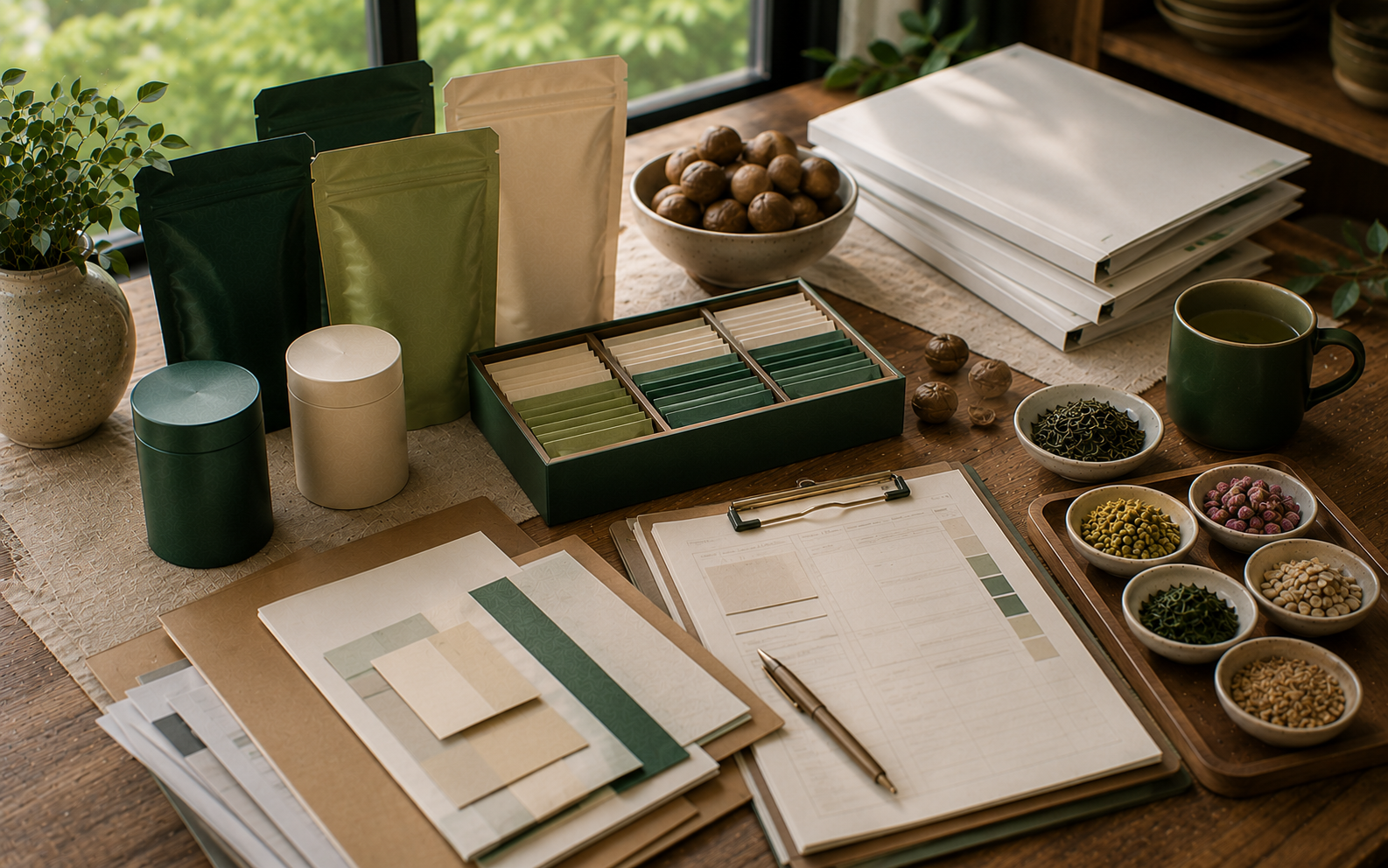
**Premium Retail Positioning** – Individual sachets in rigid boxes, matte finishes, minimal text, origin storytelling. Higher unit cost but stronger margins.
**Daily Wellness Positioning** – Resealable pouches or tins, clear ingredient visibility, usage guidance. Balance of premium feel with practical value.
**Food Service and Hospitality** – Bulk packaging, portion control, easy storage. Less emphasis on shelf appeal, more on functionality.
**Private Label Flexibility** – Neutral packaging ready for your brand application, or custom design from concept to production.
Lead time for custom packaging typically ranges from 8-12 weeks depending on complexity. Sample packaging can usually be prepared in 2-4 weeks for approval.
What to Clarify Before Sampling
Before requesting samples, having clear answers to these questions will help ensure productive discussions:
1. **Target Market** – Which countries or regions? This affects regulatory requirements and labeling.
2. **Sales Channel** – Retail, food service, e-commerce, hospitality? This influences format and packaging.
3. **Price Positioning** – Premium, mid-market, or value? This determines ingredient quality and packaging options.
4. **Volume Expectations** – Initial order size and annual projection. This affects MOQ flexibility and pricing.
5. **Brand Direction** – Your own brand or private label? This determines packaging scope.
6. **Timeline** – When do you need to launch? This affects production scheduling.
The more specific your brief, the more relevant the samples and recommendations you will receive.
Working with Your Supplier
A productive supplier relationship in this category goes beyond transactional ordering. Look for partners who can:
- Help refine your product concept based on market experience - Provide formulation guidance and adjustment support - Offer flexible MOQ for initial market testing - Support custom packaging development - Prepare documentation for your target market requirements - Communicate clearly throughout the development process
The initial inquiry and sample stage is an opportunity to evaluate not just product quality, but communication quality and problem-solving capability.