Matcha has evolved from a niche Japanese tea into a mainstream wellness ingredient appearing in cafés, retail products, and foodservice operations globally. For buyers looking to source organic matcha for their wellness café or retail brand, understanding matcha grades, quality indicators, and sourcing considerations is essential for building successful product lines.
Understanding Matcha Grades
Not all matcha is created equal. Grade distinctions significantly affect flavor, color, and appropriate applications:
**Ceremonial Grade** – Highest quality, made from the youngest tea leaves with stems and veins removed. Vibrant bright green color, smooth umami flavor, minimal bitterness. Essential for traditional preparation (whisked with water) and premium straight matcha drinks.
**Premium Grade** – High quality suitable for both drinking and culinary applications. Good color and flavor, slight grassiness.
**Culinary Grade** – Designed for cooking, baking, and blending. Stronger, more robust flavor that stands up to other ingredients. Works well in lattes, smoothies, and food applications.
**Ingredient Grade** – Basic quality for food manufacturing where matcha is one of many ingredients.
For wellness cafés, ceremonial or premium grade is recommended for signature matcha drinks where the matcha flavor is prominent. Culinary grade works well for lattes and blended beverages where milk and other ingredients temper the matcha intensity.
Organic Certification Considerations
Organic matcha certification adds value for health-conscious consumers but requires careful supply chain verification.
**Certification Bodies** – JAS (Japanese Agricultural Standard), USDA Organic, and EU Organic are the primary certifications. Verify that your supplier holds valid certification for your target market.
**Price Premium** – Organic matcha typically commands 30-50% premium over conventional. Evaluate whether your market positioning supports this cost.
**Supply Availability** – Organic matcha production is more limited than conventional. Establish reliable supplier relationships to ensure consistent availability.
**Documentation** – Request organic certificates for each batch. Maintain documentation for your own organic claims compliance.
Not all matcha sold as organic meets rigorous certification standards. Work with suppliers who provide complete certification documentation and traceability.
Quality Indicators for Buyers
Beyond certification, several quality indicators help evaluate matcha:
**Color** – High-quality matcha is vibrant bright green. Dull, yellowish, or brown tones indicate lower quality or age.
**Aroma** – Fresh matcha has a pleasant vegetal, slightly sweet aroma. Stale or low-quality matcha smells flat or hay-like.
**Texture** – Fine, silky powder indicates proper stone-grinding. Gritty texture suggests lower quality processing.
**Taste** – Quality matcha has balanced umami, subtle sweetness, and minimal bitterness. Avoid matcha that tastes harsh or astringent.
**Foam** – When whisked, quality matcha produces fine, persistent foam. Poor foam formation indicates lower grade.
Always request samples before committing to orders. Evaluate samples both as traditional whisked matcha and in your intended applications.
Café Application Considerations
For wellness café operations, matcha application requires attention to preparation consistency and operational efficiency:
**Sifting** – Matcha clumps easily. Sifting before preparation ensures smooth texture. This adds a preparation step that must be built into workflow.
**Water Temperature** – Traditional preparation uses 70-80°C water. Too hot and matcha becomes bitter. Training staff on proper technique is important.
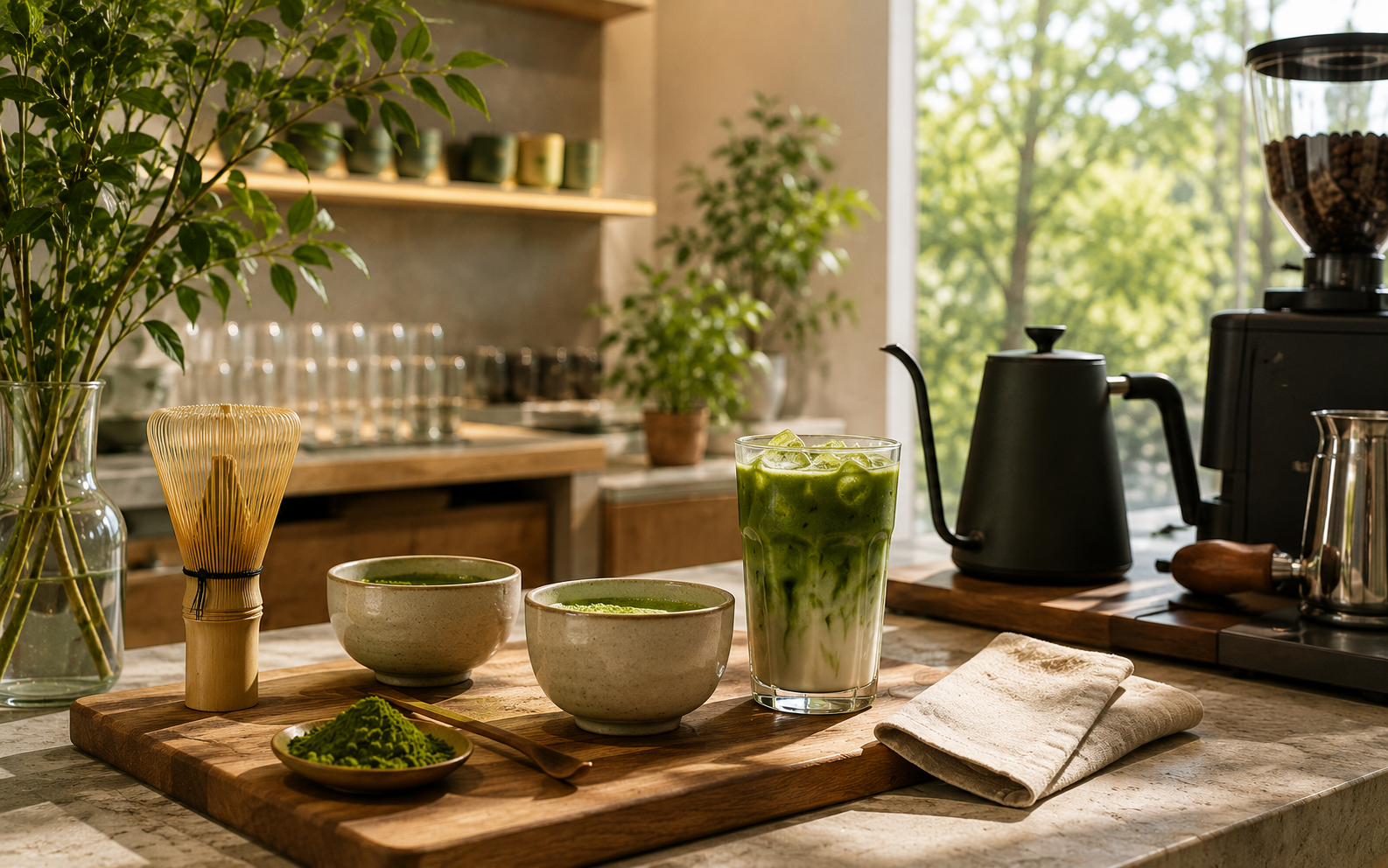
**Milk Pairing** – For lattes, oat milk and other plant milks complement matcha well. Dairy works but can mask subtle flavors.
**Portion Control** – Consistent portioning ensures drink quality and cost control. Measured scoops or pre-portioned packets help.
**Storage** – Once opened, matcha oxidizes and loses quality quickly. Store in airtight containers away from light and heat. Refrigeration extends opened-package freshness.
Consider your operational capacity when planning matcha menu items. High-quality matcha preparation requires more attention than basic tea brewing.
Retail Product Development
For retail matcha products, packaging and positioning are critical:
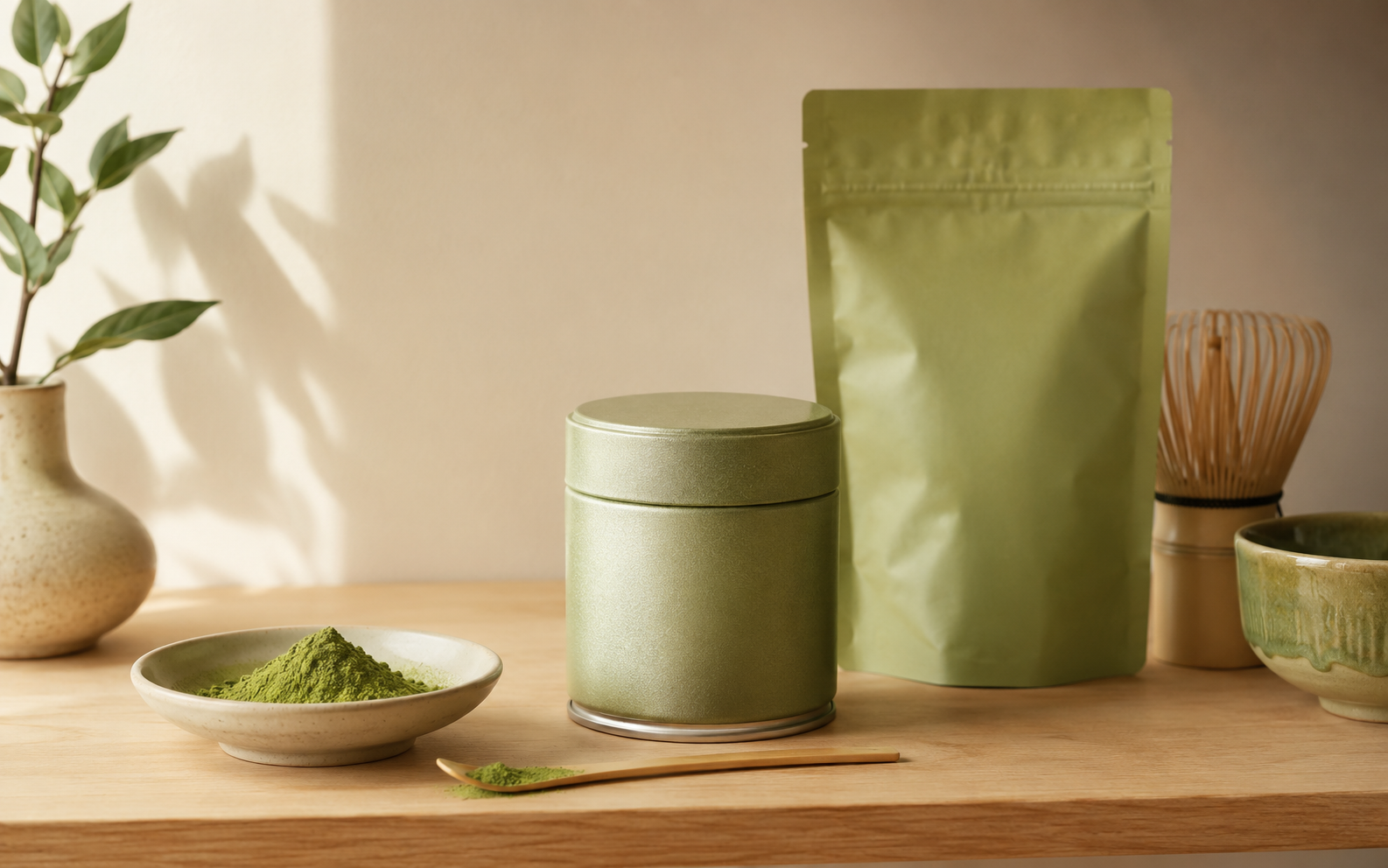
**Packaging Protection** – Matcha degrades with light, heat, and oxygen exposure. Packaging must provide complete protection. Tins, opaque pouches with nitrogen flush, and inner foil barriers are common solutions.
**Shelf Life Communication** – Clearly communicate freshness windows. Matcha is best consumed within a few months of production.
**Usage Guidance** – Include preparation instructions. Many consumers are unfamiliar with proper matcha preparation.
**Positioning Options** – Premium ceremonial matcha for tea enthusiasts, culinary matcha for home baking, matcha latte kits for convenience-focused consumers.
**Price Points** – Matcha pricing varies dramatically. Position products clearly within your target price range.
Supply and Storage Planning
Matcha freshness degrades over time, which affects purchasing and inventory planning:
**Harvest Timing** – Premium matcha comes from spring first-flush harvest (April-May in Japan). The freshest matcha becomes available in late spring and summer.
**Purchase Frequency** – Rather than buying large quantities annually, consider more frequent smaller orders to maintain freshness.
**Cold Storage** – Unopened matcha stores best refrigerated or frozen. Establish cold storage capacity for inventory.
**Supplier Freshness Commitment** – Ask suppliers about harvest dates and storage conditions. Quality suppliers maintain cold chain and provide harvest information.
Building relationships with suppliers who prioritize freshness ensures your customers receive quality matcha that represents your brand well.