Use the dry frame to build a vocabulary
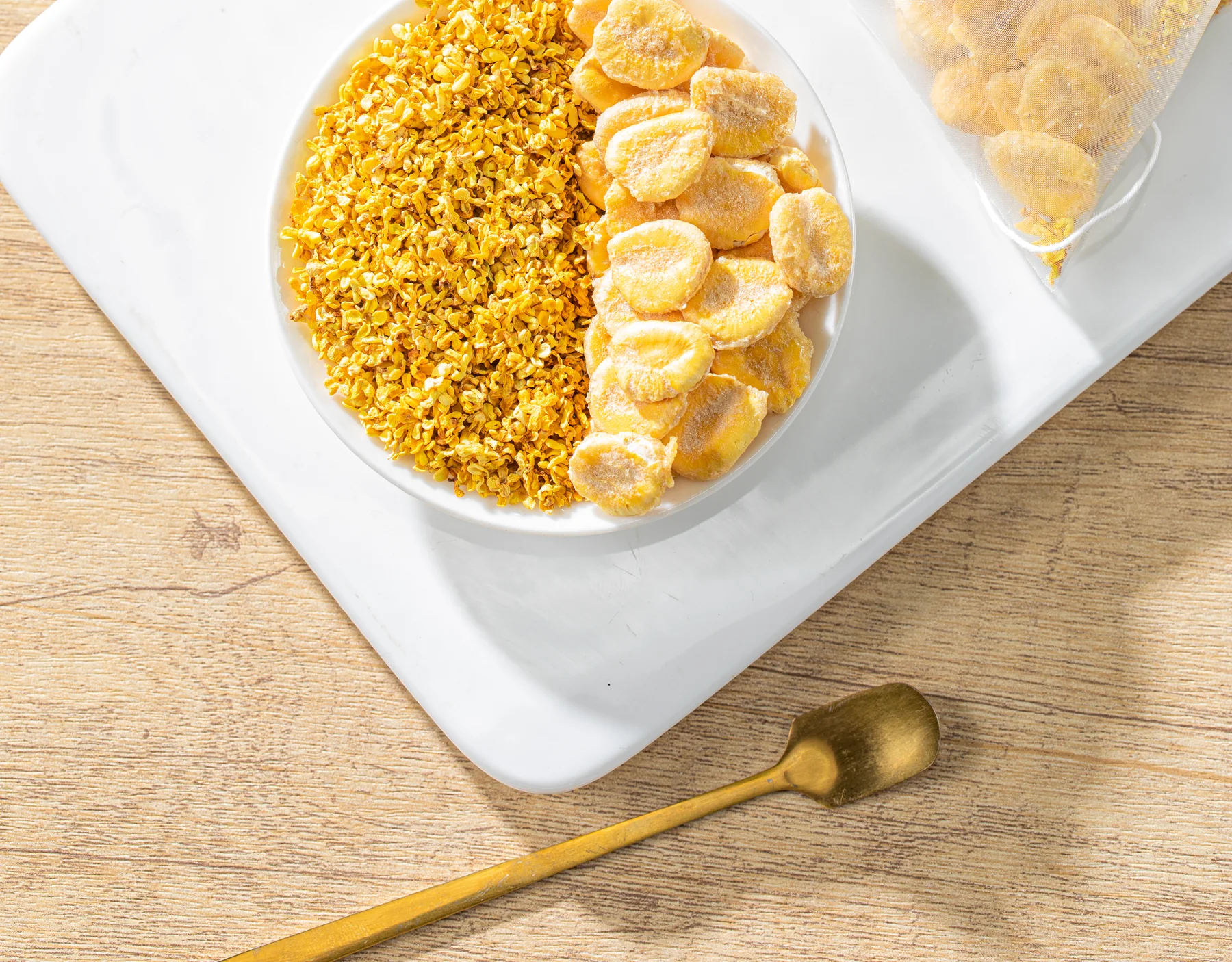
A clean botanical photograph helps buyers discuss visible form: whole flowers, fruit pieces, leaves, colour range and cut size. It is a useful starting point for a brief when the team is still comparing directions.
The frame is not a formula. Do not infer exact ingredient percentages, grade, origin, organic status, treatment, or health effect from appearance alone.
Define the drinking moment
Describe whether the blend is intended for a daily substitute tea, a hotel welcome service, a retail sachet, a cafe drink, or another channel. Serving method changes the acceptable cut size, infusion time, clarity and presentation.
Include the desired cup colour, aroma direction, sweetness approach and visible ingredient expectation. These are buyer preferences that can be reviewed during tasting rather than promises made from the photo.
Ask the supplier to confirm the blend
Request a product or sample code, ingredient identity, preparation instructions and any available specification information for the route. If the blend changes between sample rounds, record the revision and the reason.
For market launch, ask which allergen, labeling, storage and batch documents apply to the selected product. Keep those requests distinct from the editorial description of the image.
Keep traditional tea as a separate input
Traditional tea leaves can inform a herbal or substitute-tea discussion, but they should not be silently folded into a current named blend. Label the input as a separate capability or material-scope question until the buyer and supplier agree on its role.
This keeps the four current product families clear while allowing future tea directions to be reviewed deliberately.
Preserve the review record across revisions
If a botanical direction changes, retain the earlier sample code and note which visible, sensory, or format point is being reconsidered. This makes internal feedback comparable and prevents an updated photo or new sample name from hiding a material change in the project route.
A concise revision record also helps the buyer decide whether another tasting is needed, which questions need evidence, and which information can move to packaging or market review. It is a disciplined process aid, not a claim about a finished blend.
Use the brief to align product and format work
Once the buyer has a clear ingredient direction, connect it to the relevant herbal tea page, use scenario, and inquiry route. This creates a common reference for people reviewing samples, preparation, and packaging rather than asking each person to interpret the same botanical image differently.
Keep the brief specific about what has been observed and modest about what has not been confirmed. A product form can be a valid discussion point while formulation, label, and technical data still require review. This distinction helps the project progress without turning early-stage imagery into an unsupported promise.
Before the next review, name the questions that are still unanswered and assign an owner. This simple step keeps buyer preferences, supplier responses, and marketing language from being combined into a single unverified statement.