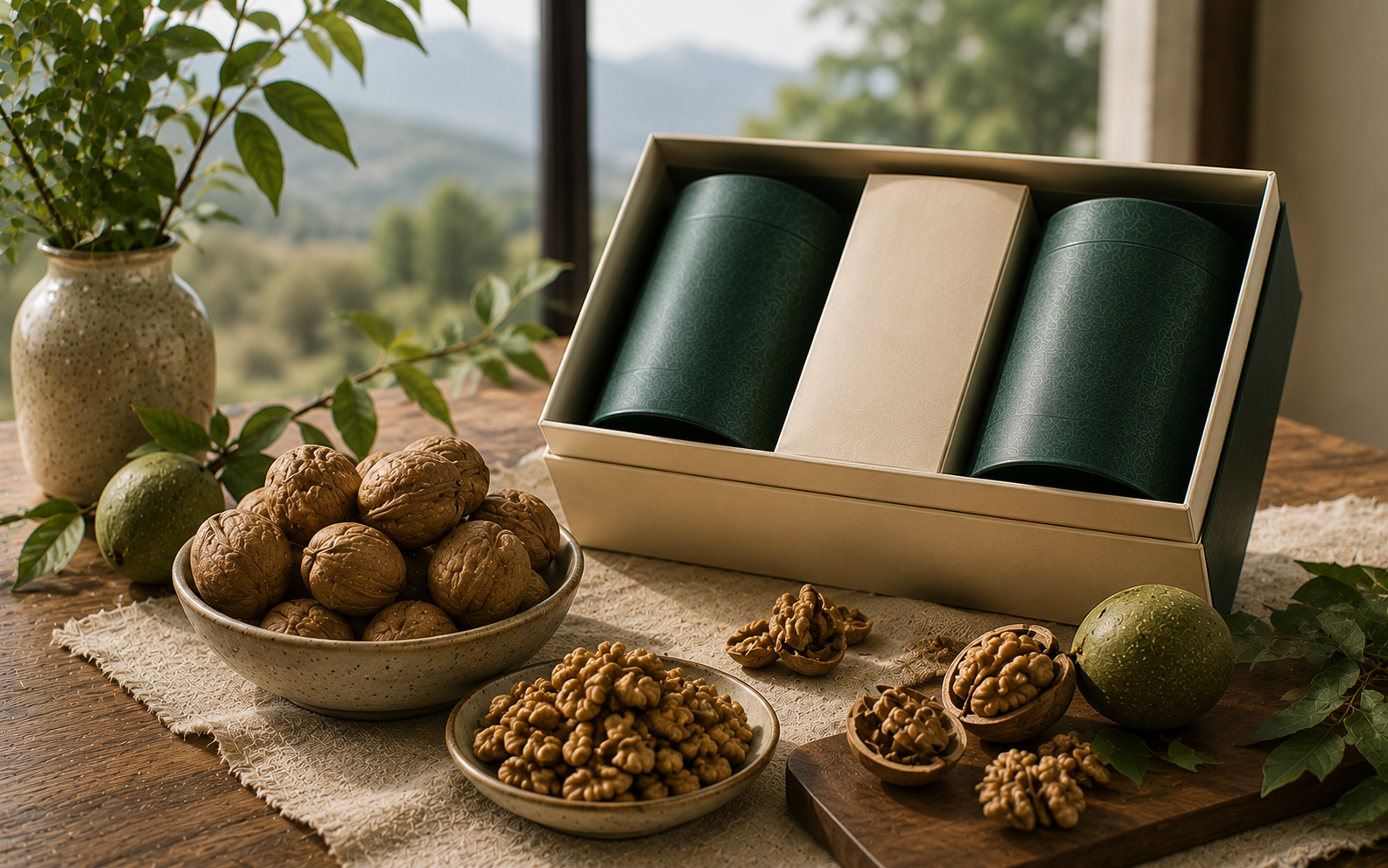
Xinjiang walnuts, particularly the prized 185 variety, represent one of China's premium agricultural products with significant potential for international markets. For buyers interested in premium walnuts for retail, gifting, or private label applications, understanding Xinjiang's unique growing conditions, variety characteristics, and quality indicators helps inform sourcing decisions.
The Xinjiang Growing Region
Xinjiang, China's westernmost province, provides distinctive growing conditions for walnut cultivation. The region is characterized by extreme temperature variation between day and night, long sunshine hours during the growing season, low humidity and rainfall, mineral-rich soil from ancient mountain deposits, and irrigation from glacial snowmelt.
These conditions stress the walnut trees in ways that concentrate flavor and nutrition in the kernels. The result is walnuts with richer taste, higher oil content, and distinctive characteristics compared to walnuts grown in more temperate climates.
The primary walnut-growing areas in Xinjiang are located in the southern part of the region, particularly around Hotan, Kashgar, and Aksu. These areas have centuries of walnut cultivation history.
The 185 Variety
The 185 designation refers to a specific walnut variety developed through selective breeding for desirable characteristics:
**Thin Shell** – The 185 variety has remarkably thin shells that can often be cracked by hand. This makes kernel extraction easy and reduces processing damage.
**High Kernel Ratio** – More of the walnut weight is edible kernel compared to thicker-shelled varieties. This improves value for retail applications.
**Large Kernel Size** – Well-developed kernels with complete halves are prized for retail and gifting.
**Flavor Profile** – Rich, slightly sweet taste with creamy texture when fresh.
**Appearance** – Light-colored kernels with intact halves are preferred for premium positioning.
The 185 variety has become the standard for premium Xinjiang walnuts, though other local varieties are also cultivated.
Harvest and Processing
Understanding the harvest and processing cycle helps with quality evaluation and supply planning:
**Harvest Season** – Walnuts are harvested September through October in Xinjiang. Fresh harvest becomes available in late fall.
**Initial Processing** – Freshly harvested walnuts must be hulled, washed, and dried. Drying method and conditions affect kernel quality and storage life.
**Grading** – Walnuts are graded by size, kernel completeness, and color. Premium grades command higher prices.
**Storage** – Proper cold storage preserves quality. Walnuts stored at room temperature degrade more quickly.
Fresh-harvest walnuts have superior taste and texture compared to older inventory. For premium applications, specify harvest year and inquire about storage conditions.
Quality Indicators
When evaluating Xinjiang walnuts for purchase, look for these quality indicators:
**Kernel Appearance** – Light golden color, complete halves without fragments, no dark spots or discoloration.
**Freshness** – Fresh walnuts have a mild, sweet smell. Rancid smell indicates age or poor storage.
**Taste** – Rich, creamy, slightly sweet flavor. Bitter taste indicates rancidity or poor quality.
**Moisture Content** – Properly dried walnuts have moisture content around 3-5%. Higher moisture increases spoilage risk.
**Shell Condition** – Clean shells without mold or damage. Even for shelled product, shell condition during storage affects kernel quality.
Request samples from potential suppliers and evaluate these characteristics before committing to orders.
Market Applications
Xinjiang 185 walnuts suit several market applications:
**Premium Retail** – Packaged whole kernels for health-conscious consumers. Clean-label positioning with origin story.
**Gift Programs** – Elegant packaging for corporate gifts, holiday gifts, and specialty retail. The Xinjiang origin adds premium positioning.
**Food Service** – Kernels for bakery, confectionery, and food manufacturing. Consistent size and quality important.
**Private Label** – Custom packaging for retailers developing house brands. Origin-specific positioning differentiates from commodity walnuts.
**Ingredients** – Chopped or ground walnuts for food manufacturing. Cost-effective use of smaller pieces and fragments.
Product format and packaging will depend on your target application and market positioning.
Supply Considerations
For buyers building Xinjiang walnut programs, several supply factors require attention:
**Seasonal Availability** – Fresh harvest is available in fall. Quality is best close to harvest. Plan inventory to balance freshness against supply continuity.
**Price Dynamics** – Walnut prices fluctuate based on harvest yield and global demand. Establish budget expectations and timing flexibility.
**Storage Requirements** – Walnuts require cool, dry storage. Establish cold storage capacity or work with suppliers who maintain cold chain.
**Documentation** – Ensure suppliers can provide origin documentation, quality certifications, and export documentation for your market.
**Minimum Orders** – Container-volume orders typically offer better pricing. Smaller buyers may need to work with distributors or accept higher unit costs.
Building reliable supply relationships takes time. Start conversations early and evaluate suppliers through sample orders before committing to large volumes.